
Ten broke friends with a governed plan will out-execute one funded founder waiting on a term sheet
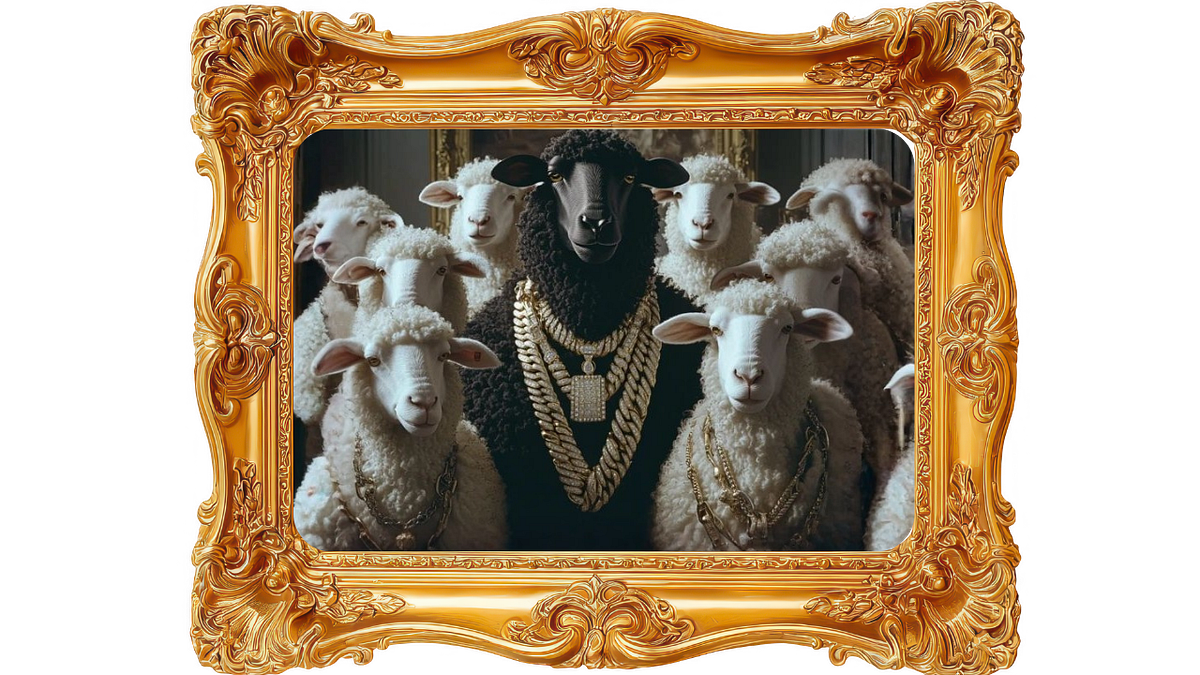
I grew up in a compound in Lawanson, Surulere, with fifty something tenants and two bathrooms. You did the math every morning before you ever did the multiplication tables. Nobody in that compound had capital. Everybody in that compound had a schedule, a system, and an unspoken agreement that if your family ran out of garri on a Tuesday, somebody else’s pot was already simmering enough for two.
Nobody called it an economic model. It was just how you survived the week.
I did not understand what I was watching until years later, sitting in a Fiserv compliance meeting reviewing a bank’s third party risk framework. What those fifty tenants were running was a functioning credit system. No collateral. No paperwork. No processor fees. Just memory of who helped who, and an understanding that memory carries interest.
That is the seed of what I call the 10 Broke Friends playbook.
The Myth of Waiting for Capital
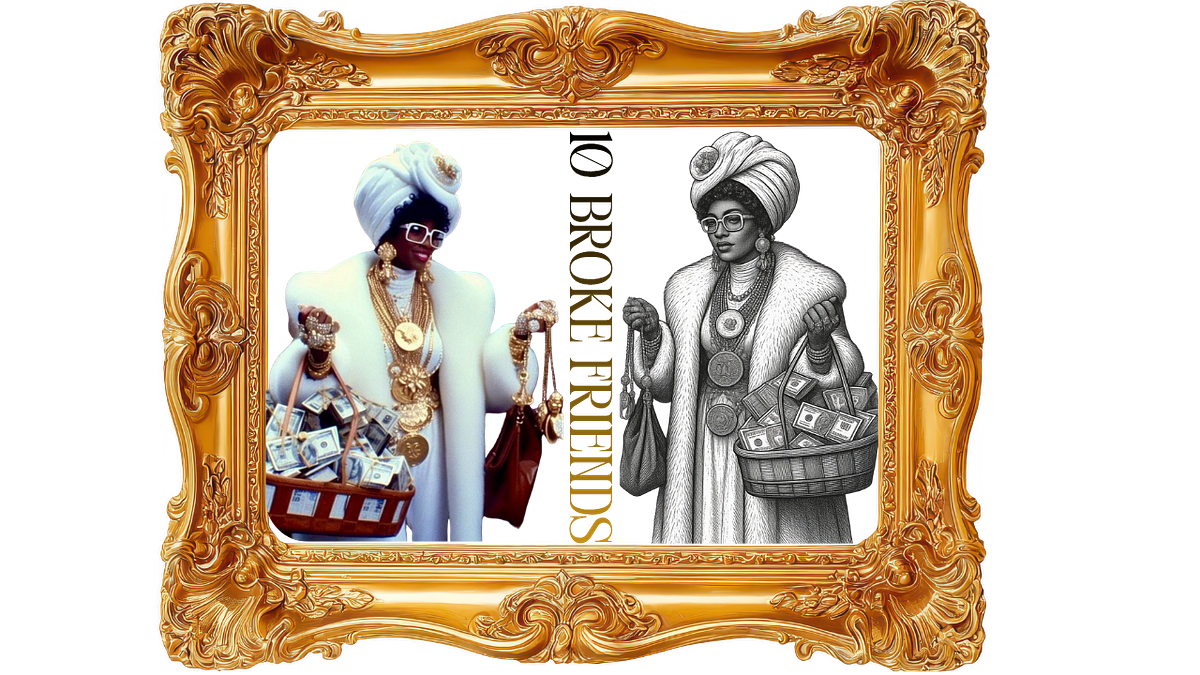
The dominant story sold to the Global South is that development is sequential. First you get infrastructure. Then investment. Then institutions strong enough to protect the investment. Only after all three do you get to build anything. Everybody in that story is waiting for someone else to move first.
It is a tidy theory. It is also wrong for anyone who does not already have access to the first three things, which describes most of the Global South and most of the diaspora funding it from a distance.
Here is what the pitch decks and the development white papers do not say out loud. Waiting for capital is a luxury reserved for people who already have some. The rest of us never had the option to wait. We had each other, and we built with that, or we did not build at all.
10 Broke Friends is not a fundraising gimmick. It is the observation that a small group bound by shared vision, matched skill, and a real local problem can compound faster than a lone founder chasing a term sheet that may never arrive. Trust, deployed correctly, is a currency. It simply does not show up on a balance sheet. Which is exactly why the people who write balance sheets keep missing it.
What Colonization Actually Broke

Colonial economies were not built to develop the colonized. They were built to extract from them. That is not a controversial sentence. It is an accounting statement. Local trade networks, communal labor systems, and indigenous lending circles that had run West African and East African economies for centuries were re-engineered to feed European metropoles instead of local households. When the formal systems eventually left, they took the paperwork with them. They did not take the memory.
That is part of why the informal economy in a country like Nigeria is still estimated to carry as much as 88 percent of total employment. Not because Nigerians lack ambition. Because the formal economy never fully returned to serve the people it had displaced.
Here is the part that stings a little. We spent a generation being taught that the informal, communal way our parents survived was backward, and that the individualist, credentialed, corporate way was progress. I hold the Harvard certificate and the compliance alphabet, PCI DSS, NIST 800–53, SOC 2, GDPR, the whole roster. Credentials are the entry fee. Never the pitch. And none of that alphabet moves faster or holds tighter than the trust economy that raised me in Lawanson/Ojo/Ikeja Lagos Nigeria.
The Receipts
This is not sentiment. It is measurable.
The Igbo apprenticeship system, known as Igba Boi, is one of the most studied indigenous business models on the continent. A 2022 study published in IIARD’s International Journal of Economics and Business Management found that more than 65 percent of traders in major Igbo markets started as apprentices under this exact model. An established trader takes in a young apprentice, trains him at no cost, and settles him with starting capital to open his own shop at the end of the term. A separate 2024 study of Igbo business owners in Ibadan’s Dugbe market found that 98 percent of respondents had come up through the apprenticeship system, and more than 60 percent had sustained their businesses for over a decade.
That is not luck. That is a governed structure for group economics that predates the word “startup” by at least a century.
Susu in West Africa. Esusu among the Yoruba. Tandas across Latin America. Chit funds in South Asia. Every one of these is a rotating savings circle where a small group pools fixed contributions and takes turns receiving the lump sum. World Bank research finds that roughly one in four adults across Sub-Saharan Africa report belonging to one. By the early 2010s, CARE and partner development agencies had scaled community savings circles like these to nearly two million participants across the continent. No bank branch required.
Silicon Valley calls it a seed round. Lagos has been calling it osusu since before Silicon Valley had a valley.
Trust Is Not a Business Plan
Here is where I push back on my own idea, because a coined phrase without governance is just a nice sentence.
“Broke” cannot be the operating identity. It is the starting condition, not the brand. What actually makes a 10 Broke Friends unit survive past month four is not vibes. It is structure. Vision, mission, values, and delegation, written down before a single dollar changes hands. Equity split on paper, not implied over drinks. An exit clause, because somebody will eventually want out, and the group needs to survive that without shattering.
Here is the uncomfortable part specific to us. You cannot fire your cousin. Kinship makes accountability expensive in exactly the rooms where these groups form. Sincerity of purpose matters. But sincerity does not scale on its own. The Igbo apprenticeship system did not survive five decades on goodwill. It survived on a fixed term, a defined role, and a guaranteed settlement at the end. Structure is what turns sincerity into something that outlasts the first disagreement.
Size over growth. A tight, governed unit of committed people will out-compound a loosely bonded crowd every time, because the crowd cannot make a decision by Thursday and the unit can.
I have watched families turn this exact model into dynasties. I have also watched families implode on the same model, minus the paperwork. The difference was never the friendship. It was the framework underneath it.
The Global South does not have a talent problem. It does not have a vision problem. It has a structure problem wearing a poverty costume. Ten broke friends with a governed plan will out-execute one funded founder waiting on a term sheet, because the friends already started while the founder was still waiting for permission.
TIME AFRICA is mapping this thesis into a full framework in real time. If you are already running your own version of this with your own broke friends, that conversation is happening now, inside AfroXchange.
You do not need a bank to believe in you. You need nine other people who already do, and a document that says what happens next.
I AM AFRONOUVEAU.
Join the ALT Code